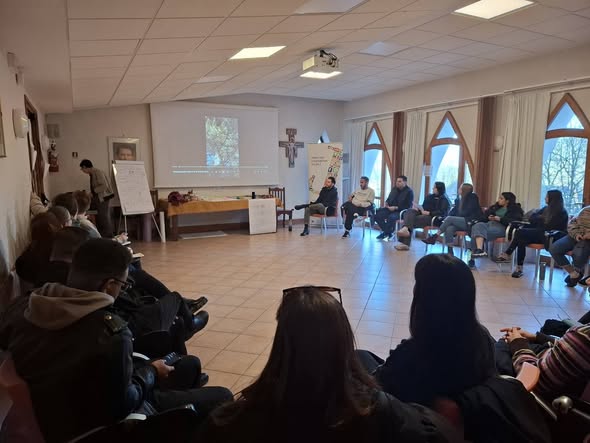
🎯 📌 The main topics covered during the training were the inclusion of young people, reaching target audiences on social media, active listening, ensuring sustainability, and supporting young people in developing activities.
🔵 Elīza: “Taking part in the training was a genuine Erasmus+ experience, starting with a genuine intercultural dialogue and ending with long days of learning, during which we really managed to explore various aspects of youth participation. I found exploring the topic of inclusion through a simulation game to be the most valuable part, as it allowed me to look at young people facing health issues from a completely different perspective. This knowledge will certainly be useful in my day-to-day work as well.”
🔵 Līva: “Building a genuine connection with young people by using language and an approach they can understand is essential. Creative tools, combined with practical methods, help to create meaningful, engaging activities – it is precisely this collaborative process that fosters motivation, trust and the conviction that young people’s views really do matter.”
🔵 Katrīna: “This study visit showed me why young people often end up on the sidelines – we all too often decide everything for them. During the training, I learnt how to carry out a needs assessment properly in order to create activities that are genuinely relevant to young people. I feel more ready to adopt a new approach in my work: to take a back seat and let young people take the lead.”
🔵 Paula: “We delved into practical matters rather than just talking generally about inclusion. We were able to compare how youth workers operate in different countries and jointly designed activities, delving into every detail.”
💕 We’d like to say a big thank you to Jonathan Cooperativa Sociale for their collaboration, as well as to the training leaders, Luka and Alise.
We’ve certainly made some valuable contacts and established partnerships – we look forward to working together on future joint projects!