Resources
Playful learning tools
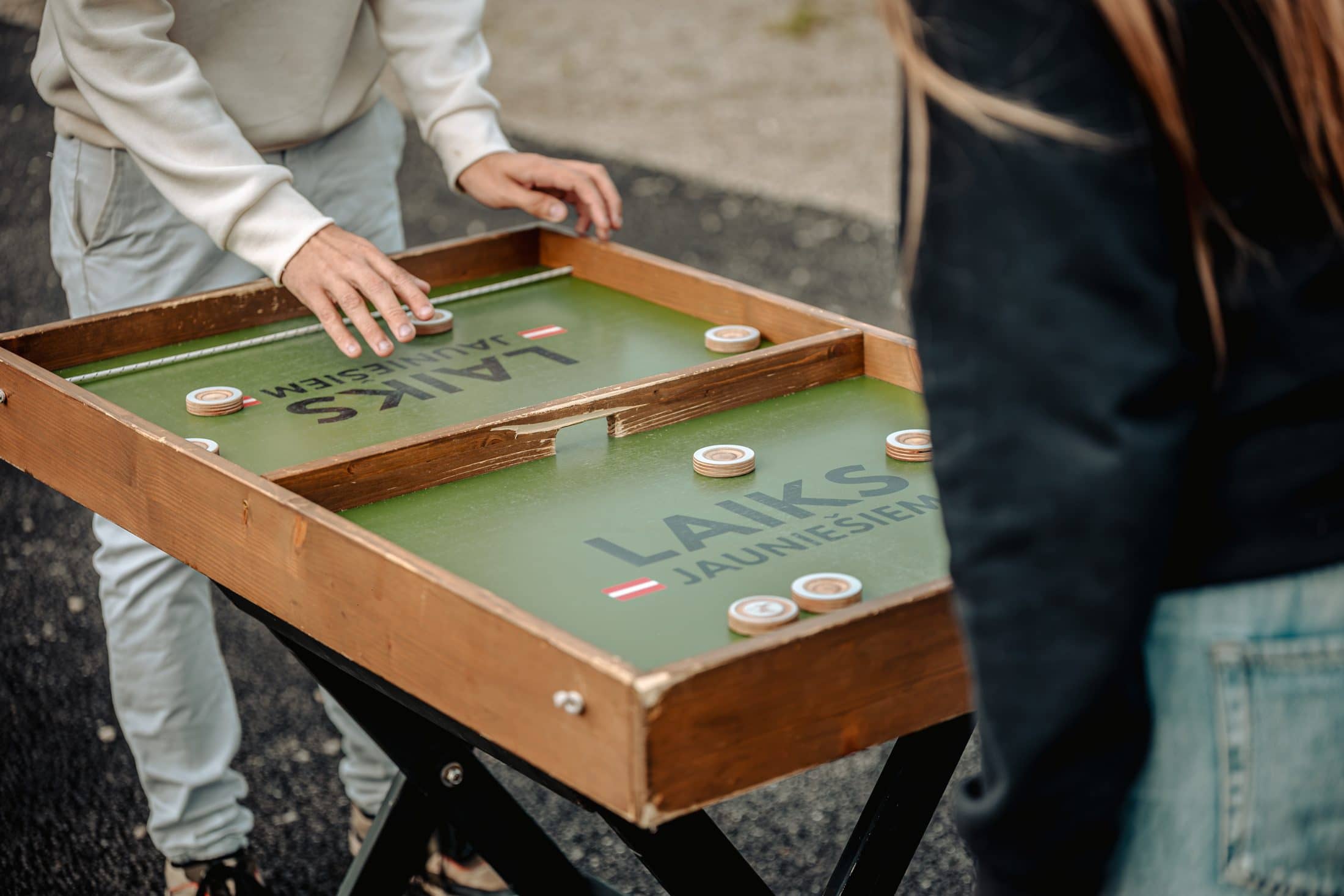
A game can be much more than entertainment - it can help start a conversation, get to know other perspectives, test knowledge and try out new ways of acting in a safe setting.
The association “Laiks Jauniešiem” has developed four practical non-formal education games for young people and adults.
They help people learn through conversation, experience, cooperation and reflection, building skills that are useful both in everyday life and in working with groups.
Approach
Learning through experience and dialogue
Our games are practical pedagogical tools that can be used in schools, youth centres, non-governmental organisations, camps, trainings, one-to-one conversations and various community activities.
Participants do not only receive new information - they also talk, analyse situations, share experiences, listen to others, cooperate and reflect on what they have learned.
The games help develop:
- media literacy and critical thinking
- social skills and an inclusive attitude
- participation and an understanding of democratic values
- emotional wellbeing and mutual trust
Games
The games we have developed
01Conversation card game
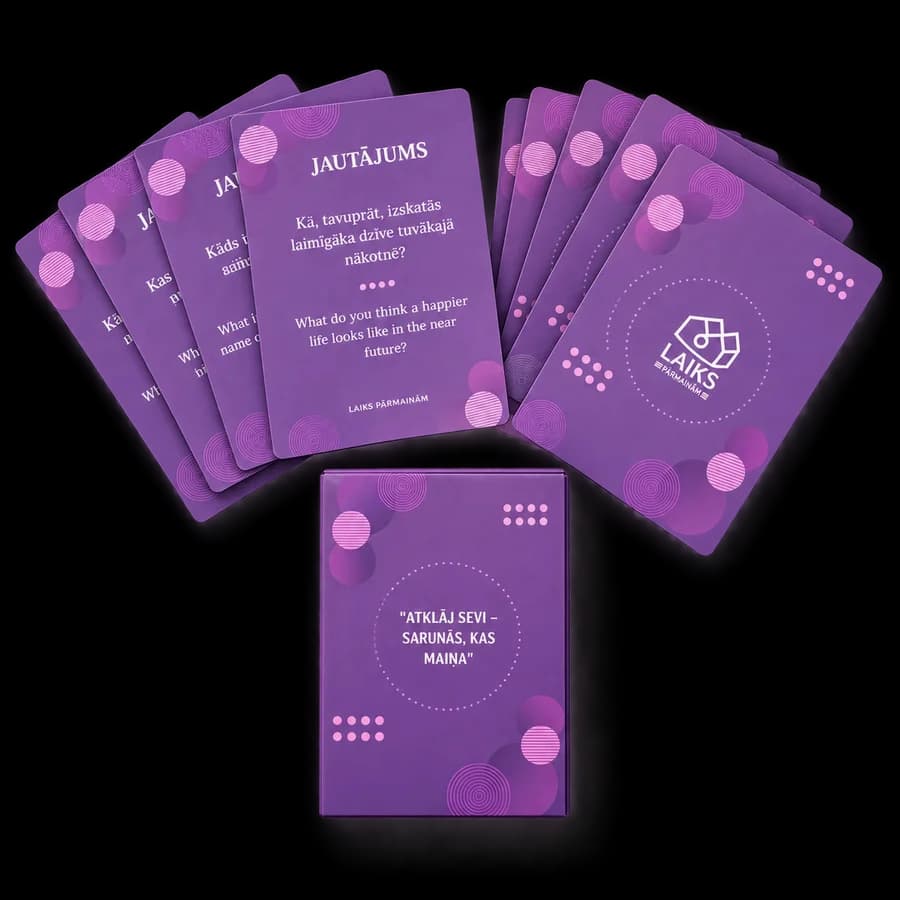
Discover Yourself - Conversations That Change
Atklāj sevi - sarunas, kas maina
A conversation card game for reflection, getting to know each other and personal growth.
The questions in the game encourage open and respectful conversation about emotions, values, experiences, relationships and everyday choices. It helps participants get to know themselves and others better, put their thoughts into words, listen and build mutual trust.
The game helps develop:
- emotional intelligence
- self-reflection and awareness of one's own values
- listening and conversation skills
- mutual trust and respectful communication
The game is suitable for one-to-one conversations, group sessions, youth events, camps, team building and community activities.
- Format
- conversation card game
- Languages
- Latvian and English; it can also be adapted to other languages
02Board game
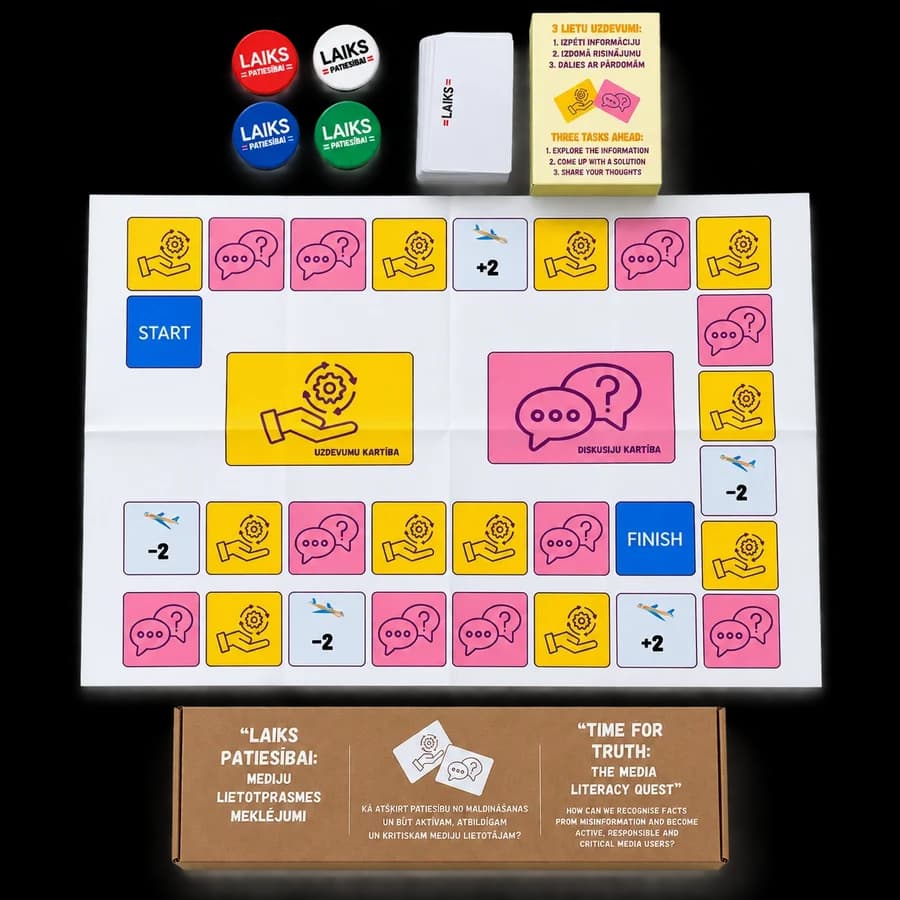
Time for Truth: The Media Literacy Quest
Laiks patiesībai: mediju lietotprasmes meklējumi
A board game with a game board and cards for developing media literacy and critical thinking.
During the game, participants check facts, analyse sources of information, recognise disinformation and manipulation techniques, and discuss safe and responsible behaviour in the digital environment. The game helps people understand why information should not be accepted as true just because it looks convincing or is widely shared.
The game helps develop:
- critical thinking
- skills for checking facts and sources of information
- recognising disinformation and manipulation
- an understanding of digital safety and responsible media use
The game is suitable for group sessions, schools, youth centres, camps, trainings and media literacy workshops.
- Format
- board game with a game board and cards
- Languages
- Latvian and English; it can also be adapted to other languages
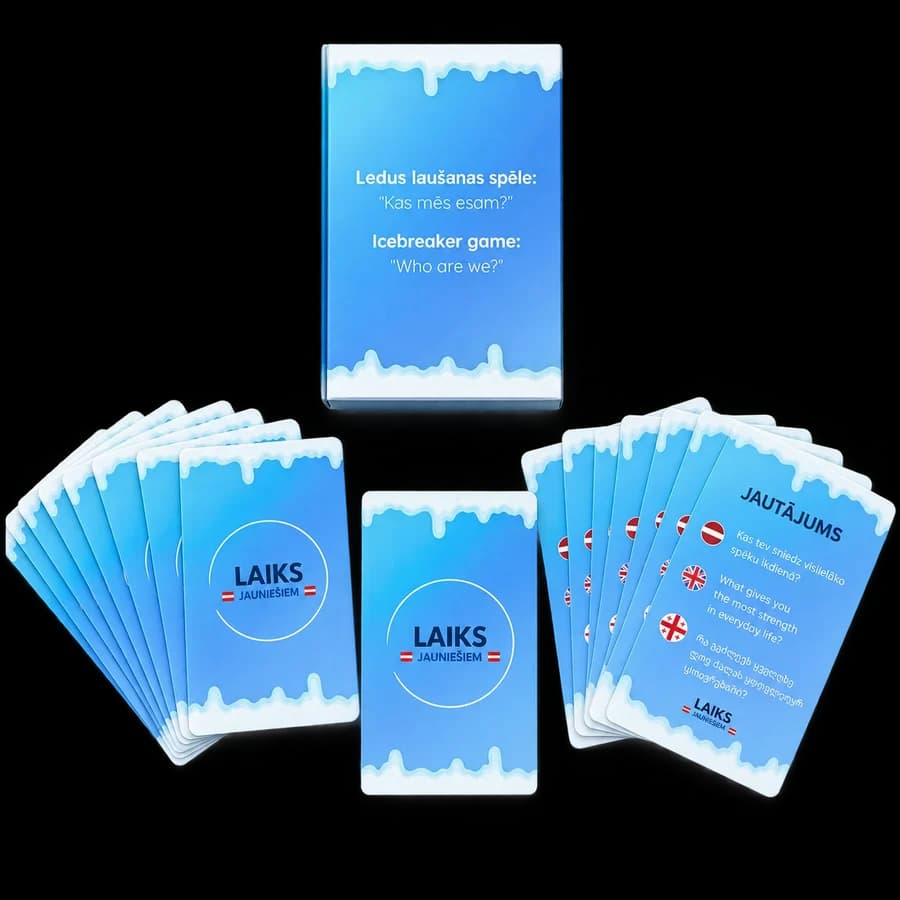
03Conversation card game
Who Are We?
Kas mēs esam?
A conversation card game for getting to know a group and building team spirit.
The game helps start conversations in a light and friendly way, reduce initial shyness and build a sense of belonging. By answering questions and listening to others, participants discover what they have in common, get to know what is different and gradually build a safer and more open group environment.
The game helps develop:
- getting to know each other and building trust
- a sense of belonging
- the ability to listen and share experiences
- cooperation and an inclusive group culture
The game is suitable for the first meetings of a group, youth events, camps, the start of a course, team building and community activities.
- Format
- conversation card game
- Languages
- Latvian and English; it can also be adapted to other languages
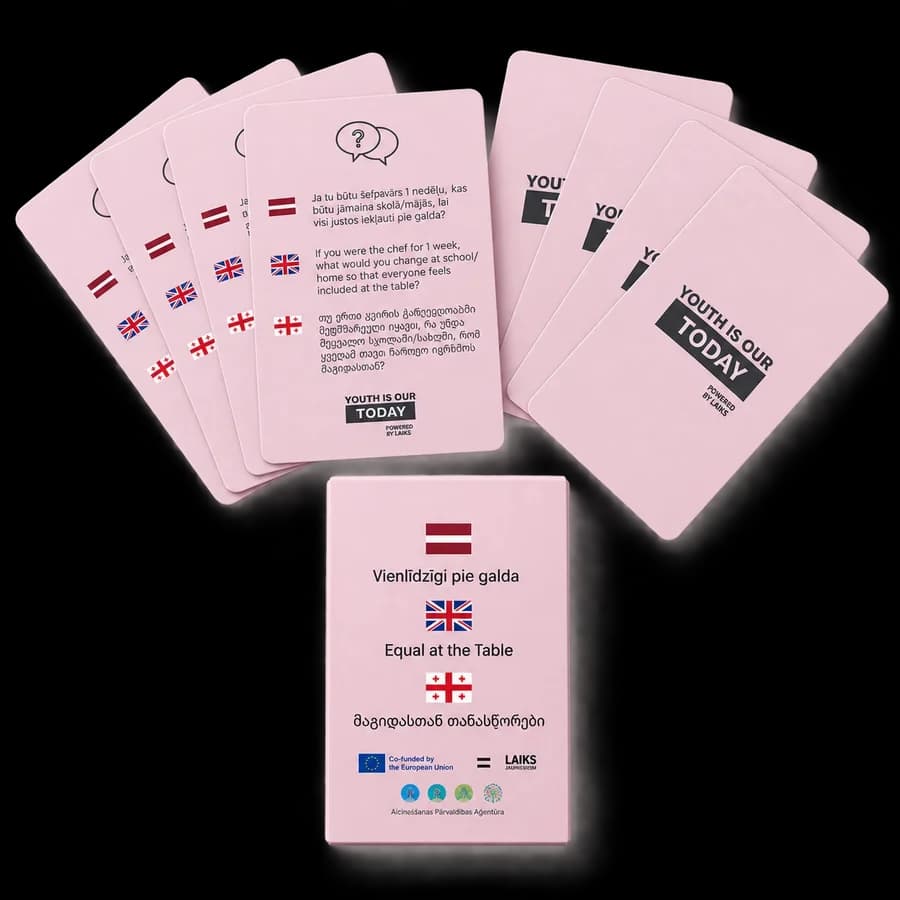
04Conversation card game
Equal at the Table
Vienlīdzīgi pie galda
A conversation card game about democracy, human rights, sustainable development and youth participation.
The game prompts conversations about the United Nations, the Sustainable Development Goals, human rights, democracy, peace, security, climate action and the opportunities for young people to take part in shaping change. It makes globally important topics understandable and engaging by linking them to participants' everyday lives and local community.
The game helps develop:
- an understanding of human rights and democratic values
- civic responsibility and participation
- the ability to listen to and respect different opinions
- an understanding of sustainable development, peace and climate action
The game is suitable for group sessions, schools, youth centres, participation workshops, trainings and community activities.
- Format
- conversation card game
- Languages
- Latvian, English and Georgian; it can also be adapted to other languages
Use
One game - many ways to use it
The games can be used as a stand-alone activity, an introduction to a wider discussion, a team-building method, or part of a learning and non-formal education programme.
The games can be used again and again, and adapted to the age, experience and needs of a particular group and to the aim of the session.
They are suitable for:
- schools and other educational institutions
- youth centres and non-governmental organisations
- camps, seminars and youth events
- the work of teachers, youth workers, mentors and social workers
- team building and community activities
- one-to-one conversations and group sessions
You can learn by playing, too
Choose the game best suited to your group and create an environment where participants want to talk, think, cooperate and take part.
Want to use our games?
If you would like to use the games at your school, youth centre, organisation or event, get in touch with us. We will tell you about availability, ways to obtain the games and the most suitable solution for your audience.
You can also discuss adapting the games to a specific audience or language, buying a larger number of copies, a session or workshop led by the association, and long-term cooperation in learning and youth work activities.